


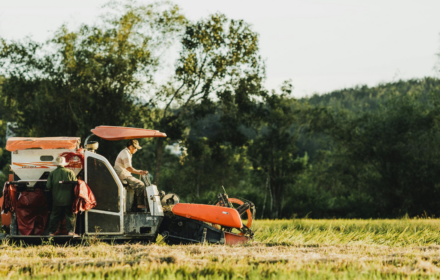
The landscape of agricultural recruitment in the UK stands at a critical crossroads in 2026. As geopolitical shifts, climate volatility, and rapid technological advancements reshape our food production lines, securing skilled talent has evolved from a HR task into a vital strategic priority. In an industry where labour shortages directly threaten productivity, navigating the shifting trends of agricultural recruitment in the UK is crucial to safeguarding national food security.
For farms, food producers, and rural supply chain businesses, finding the right talent has rarely felt more complex. Below, we analyse the six most critical challenges facing the sector today and explore how forward-thinking employers are adapting to build resilient, sustainable teams.
1. The Ageing Workforce and the Succession Gap
The demographic challenge within UK farming is well-documented but continues to intensify. According to recent DEFRA Agricultural Workforce statistics, the total number of people working on agricultural holdings in England fell by another 1.9% year-on-year. Even more critically, farmers, business partners, and directors still account for 60% of the total workforce, with an average age hovering around 59.
As older generations transition into retirement, we aren’t just losing headcount, we are losing invaluable generational knowledge. Because family-succession rates are dropping, the challenge falls on professional agricultural recruitment in the UK to build clear pathways for non-farming entrants to transition into vital leadership roles, such as Farm Managers and Livestock Supervisors.
2. The Tech-Skills Gap and Fast-Paced Automation
We are no longer discussing automation as a future concept. In 2026, it is actively running our farms. From GPS-guided tractors to robotic milkers and drone crop-mapping, technology is stepping in to assist.
However, this has triggered a massive skills gap. Modern agricultural units have a shortage of Agricultural Engineers, Technical Managers, and Precision Operators who can manage these complex digital systems. To address this, the government launched initiatives like DEFRA’s £2.3 Million ADOPT Fund and over £45 Million in robotics and smart-irrigation grants to push tech adoption but finding the specialised human talent to run these machines remains incredibly competitive.
3. High-Salary Competition from Adjacent Industries
Agricultural businesses do not recruit in a vacuum. Maintenance engineers, specialised machine operators, and supply chain managers possess highly transferable skills that are highly coveted by competing, high-margin sectors such as commercial construction, civil engineering, and logistics.
Rural employers are frequently outbid on wages and flexible working conditions. As a result, successful businesses are shifting their hiring model from transactional to relational. Attracting top talent in 2026 means offering structured career development, reliable working hours, and high-quality on-farm accommodation.
4. Seasonal Labour Constraints and New Visa Caps
Seasonal pressures remain a permanent feature of UK horticulture and poultry production. For 2026, the Home Office capped the Seasonal Worker Scheme (SWS) visa allocation to 42,900 places (comprising 41,000 for horticulture and 1,900 for poultry). This represents a reduction of 2,000 visas compared to 2025.
According to the NFU 2026 SWS Allocation Briefing, while the confirmation of the visa scheme brings much-needed planning certainty to growers, the tighter quotas require absolute administrative efficiency. A single visa delay during a peak recruitment window can lead to unharvested crops, meaning there is zero room for error in your seasonal recruitment pipelines.
5. The Physical Reality of Rural Recruitment
By default, agricultural businesses operate far from major metropolitan talent hubs. A recent FarmingUK report on the rural economy highlighted that rural businesses are constantly held back by poor transport infrastructure, housing shortages, and recruitment pressures.
Attracting young, qualified professionals to relocate to remote regions requires a proactive approach. The most successful agricultural employers are actively combatting this geographic barrier by bundling competitive relocation assistance, investing in high-quality on-site housing, and collaborating with local regional networks to foster a welcoming community for new hires.
6. Navigating a Selective and Passive Talent Pool
Farming candidates in 2026 are highly selective. They thoroughly research farm culture, management styles, and environmental standards before they submit an application.
Post-and-hope recruiting on generalist job boards is yielding fewer results than ever. To secure experienced Production Supervisors, Quality Managers, and Farm Operators, employers must utilise passive candidate headhunting and leverage pre-existing networks.
The ISQ Approach
To bypass these bottlenecks, generalist recruitment agencies simply do not have the specialised depth required. You need a recruitment partner with deep roots in the farming community and modern, proactive headhunting tools.
At ISQ Recruitment, we bridge the gap between traditional agricultural values and professional recruitment strategies.
- A network of more than 4,500 agricultural professionals
- 13 Years of Combined Agricultural Sector Experience
- 95% Placement Retention Rate after 12 Months
Get in touch with the team at ISQ Recruitment today to discuss your hiring requirements.